Sunday, 27 January 2013

5:2 diet: Cutting down portion sizes

0 comments

It is, of course, not just what you eat on a fast day but how much you eat of it. 500 calories a day (or 600 if you’re a lucky male) is not a lot so every calorie counts.

Surprisingly one of the easiest ways to do that is to cut down on the recommended portion size on ready-made products. The manufacturers of big 600ml tubs of soup, for example, assume you’re going to divide the pot between you. In fact you can divide it into three - 200ml is quite enough for a bowlful, especially if you add a splash of water to thin it out. (Most ready-made soups, I find, are too thick and gloopy*)

40g of porridge oats clocks up 138 calories. Reduce that to 30g - and allow yourself a teaspoon of cinnamon sugar which at least makes it palatable - and you’ve only used up 123.

The recommended 75g helping of rice (190g cooked weight) amounts to a scary 260 calories. Weigh out 50g of cooked rice - enough to bulk out a meal - and it’s an affordable 56.

Of course it doesn’t work with everything. 20g of cheese - hardly worth having which is why I rarely bother with it on fast days - is still ridiculously calorific but you get the point . . .

*While on the subject of soup - watch out for the sugar content. Sugar in soup? Absolutely. I was perplexed as to why Waitrose own brand soups were so much more calorific than the Tideford soups that my local health food shop stocks. (Their tomato, red pepper and lentil soup, for example, is only 52 calories for 200g.) The answer seems to be that most contain sugar.

Read more ►

Friday, 25 January 2013

Katie Stewart's apricot teabread

0 comments

I was particularly sad to hear of the death of cookery writer Katie Stewart the other day as her books were a bible as I was learning to cook. (No, please don't work out how old that makes me.) Other people on Twitter clearly felt that way too so we had a bit of a Katie Stewart love-in last weekend when we all cooked a favourite recipe.

Mine was a teabread, the sort of cake that's gone out of fashion but which was both delicious and economical because you could slice it so thinly. It's also incredibly easy to make - a bit like a boiled fruit cake.

At the time I used to follow recipes religiously, terrified that even the slightest deviation would result in disaster but emboldened by having written a few cookery books of my own I realise they're only a guideline. Revisiting the recipe I cut down the sugar and ground cloves and would certainly use mixed spice instead of the three different ground spices Katie recommends if I didn't already have them in my storecupboard.


The central ingredient, apricots, has also changed in that unsulphured apricots are much more widely available than when the recipe was written and also tend to be sold in a ready-to-eat version. That admittedly makes the teabread less colourful but improves the flavour. (They were also a £1 a pack cheaper in my local health food shop.) You do however need slightly less liquid than the original because you don't need to rehydrate the apricots - I've made that adjustment in my version below.

Makes 1 large loaf

225g dried apricots, preferably unsulphured
200-250ml water depending whether your apricots are read- to-eat or not (less if they are)
150g caster sugar (unrefined caster sugar for preference)
75g butter
1 egg, lightly beaten
225g (8oz) plain flour
1 level tsp bicarbonate of soda
1 level tsp salt
1/2 level tsp ground cinnamon, 1/4 level tsp ground cloves and a pinch of nutmeg or 1 tsp mixed spice

You will also need a lightly oiled 9 x 5 x 3 inch (2lb) non-stick loaf tin. If you haven't a non-stick tin, line it with baking paper

Snip the apricots in small pieces (easiest with kitchen scissors) and place in a large saucepan. Add the water, sugar and butter and place over a low heat. Stir to dissolve the sugar then bring up to the boil and simmer for 5 minutes. Draw the pan off the heat and allow to cool until the hand can be comfortably held against the side of the pan. Beat in the egg.

In the meantime preheat the oven to 350°F/180°C/Gas 4. Sift the flour with the bicarbonate of soda, salt, cinnamon, ground cloves and nutmeg (or mixed spice). Tip the sifted flour mixture into the apricots and beat thoroughly.

Transfer the mixture into the loaf tin and spread evenly. Place in the centre of the oven and bake for an hour until well risen and firm. Leave in the tin for 10 minutes then tip out of the tin and cool on a wire rack. Serve sliced with butter or on its own. It also freezes well.


The recipe came from a rather charming collection called Katie Stewart Cooks which accompanied an ITV series and cost all of 40p. You might also enjoy her The Times Cookery Book and the more recent Katie Stewart's Good Food.
Read more ►

Saturday, 19 January 2013

5:2 Easy spicy 5 vegetable stew

0 comments

Looking at the arctic scene out of the window this morning I must admit the last thing I wanted to do was fast but having worked out today was the only day I could fit in over the next 3 days I reckoned I'd survive provided everything I ate was hot.

I was thinking vegetable curry but it somehow morphed into a soupy stew. A rather more calorific one than I'd intended as I hadn't checked out the calories in parsnips or Jerusalem artichokes which have almost as much as potatoes. But it still came in well within the daily allowance especially as I only had just over a third of it.

Dieting or not it's a really good frugal recipe too as you can use whatever veg you have to hand - even a small potato wouldn't be a problem though I might skip the artichokes and use swede instead if I was in danger of exceeding my daily limit.

I don't think tomato would add much unless you had a couple of squishy tomatoes you needed to use up (skin and chop them first. Leave the seeds in - they're fine). Celery or fennel would be good as would a handful of shredded greens or spinach chucked in towards the end. If it wasn't a fast day you could add chickpeas or lentils or serve it with naan. Or tweak the seasoning and turn it into a couscous.

The most significant thing though was that I didn't use any oil. The veg are just boiled which keeps the calorie count down and speeds up the recipe to about 15-20 minutes. Probably 5 minutes in a pressure cooker, which I still have to master . . .

Spicy 5 vegetable stew (376 calories)
Serves 2-3 at 125 calories a bowlful

1 medium onion (100g) 31 calories
1 medium carrot (105g) 30 calories
1 medium parsnip (105g) 69 calories
1 medium to large turnip (150g) 47 calories
4 Jerusalem artichokes (145g) 105 calories
1 tbsp korma curry paste (25g) 55 calories
750ml hot vegetable stock made with 1tbsp Marigold vegetable bouillon powder - 36 calories
A handful of chopped coriander leaves (10g) 3 calories
Salt and pepper

Peel and cut up the veg into chunky pieces. (Do the artichokes last as they discolour.) Put them in a saucepan or casserole, cover them with the hot stock and bring to the boil. Turn the heat down and simmer until the veg are almost tender. Some will cook faster than others - it doesn't matter. You can mush them up to thicken the stew.

Weigh out the curry paste, mix it in a bowl with 2 tbsp of the stock you've cooked the veg in and add it back to the pan. Reheat and simmer until the veg are fully cooked (another few minutes). Add the chopped coriander and season to taste. That's it!

PS A less successful experiment was unsweetened porridge made entirely with water and a sprinkling of cinnamon. I know the Scots eat it that way (except for the cinnamon) but to me it tasted like soggy oat-flavoured cardboard. I think next time I'd have to include a teaspoon of sugar which would be only 16 calories. Not a disaster.

Read more ►

Sunday, 13 January 2013

A couple of great frugal blogs

0 comments

I don't want you to think I've entirely forgotten the main point of this blog which is about eating frugally, not just fasting on the 5:2. And I've recently discovered a couple of blogs that do that job incredibly well.

One is A Girl called Jack written by a single mum who feeds herself and her son on £10 a week. Ten pounds! It's also far more than a food blog but covers politics, volunteering and other aspects of life in Southend. Her latest post is on a delicious-sounding fig, rosemary and lemon bread she made for 26p. And there's a great post about how the price of supermarket basics is sneaking up.

The other is written by a guy who calls himself The Skint Foodie which is more food-focused but is particularly interesting in that he's used the blog to overcome his mental health issues, an admission he makes in this admirably frank post.

It's also beautifully written - how's this for a line? "I turned love into hate, respect into pity, affection into disdain."

And he ends up. "At the heart of the concept of recovery in mental health is the idea that for anyone to have any kind of meaningful life these three elements must be present: hope, control and opportunity. If you're an alcoholic mentalist on the dole those things tend to be in short supply. Writing this blog and volunteering have, in the last year, given me a glimpse of all three."

Humbling.

PS He also has admirable taste. There are many good, simple recipes on the blog like this Indian takeaway substitute.

Read more ►

Friday, 11 January 2013

What to drink on the 5:2 diet

0 comments


Given that you’ve only got 500 calories to play with it seems a bit of a waste squandering a quarter of them on a glass of wine - or any alcoholic drink. But the diet is all about choice so if that’s your special treat you might want to know exactly how much your favourite tipple will set you back.

The good news is that a 125ml glass of champagne only tots up 95 calories but if you’ve a taste for full-bodied South American reds or shiraz at, say, 14.5% and you drink a ‘normal’ 175ml glass of it, that’s 140 calories gone*. A double whisky is 122 calories. Add a non-diet mixer and that’s 178 calories. Makes you realise where all those excess pounds come from, eh?

I don’t bother with alcohol at all when I’m fasting but a food writer friend who saves up her calories to enjoy in the evening likes a gin and diet tonic. A single measure of a 37.5% gin like Gordon’s with a low cal tonic comes to just 54 calories - almost exactly the same as the square of dark chocolate I treat myself to if I have calories to spare. Horses for courses.

Another option is a small dry fino sherry - if you can stick to 50ml (a small glass makes that seem more) it’s only 49 calories a glass.

It’s when it comes to non-alcoholic options that it gets tricky. Most fruit juices and soft drinks are in fact quite high in calories. 200ml of Copella apple juice for example adds up to 92 calories. However tomato juice is roughly half that at 44 calories per 200ml. Add a dash of Worcestershire sauce, Tabasco or a pinch of celery salt and a slice of lemon and you’ve got yourself a non alcoholic cocktail (a Virgin Mary) that doesn’t make you stand out in a crowd.

I’m not mad about diet mixers except for the Fever-tree range which, although they’re higher in calories than, say, Schweppes, don’t have that slightly metallic taste you get from most low cal mixers. They do a Naturally Light Tonic Water (20.5 cals per 100ml) and a Naturally Light Ginger Beer (24.8 calories per 100ml). With ice, 150ml gives you a decent drink

Tea has been my lifeline during the 5:2 diet and, as I’ve mentioned before, I’ve been exploring different loose leaf teas at no calorie gain at all - provided you don’t take milk or sugar. I don't take sugar, except occasionally in mint tea and have pretty well weaned myself off milk over the last six weeks. Herbal infusions are also calorie free. I particularly like a fennel infusion with a slice of lemon.

Milk is even more of a factor when it comes to coffee. If you take it black, which I invariably do on a fast day, a small black coffee is just 2 calories though a black Americano which I often drink when I’m out I was rather surprised to find was 15 according to myfitnesspal.com. And a double espresso is 10.

An instant coffee with skimmed milk (bleugh) will set you back 6 but a large latte can mount up to 180-190, over a third of your daily allowance. So no visits to Starbucks on a fast day - or on any other day so far as I’m concerned.

PS the Bristol-based producer of an interesting Japanese-style soft drink called Koji picked up on this post and offered to drop a couple of bottles round. There are two flavours, Lemon and Ginger, which would do duty for white wine and Mandarin and Cranberry which looks much like a rosé. I find the latter too sweet and too obviously orangey though I can imagine it going with spicy food like a curry. However the slightly herby lemon and ginger is really rather delicious - so much so that I demolished the rest of the (330ml) bottle. 

The best thing about them though is that they're only 49 calories a bottle which would make a 165ml  glassful just 25 calories. Perfect for those who like a drink at the end of the working day.

At the moment you can mainly find them in Bristol shops, cafés and restaurants (Chandos Deli apparently stocks them) but they've just delivered to a number of London wholesalers so you should be able to find them there. And they're also planning to sell them online. Check out their website kojidrinks.com for updates on stockists

*The unit calculator on drinkaware.co.uk is particularly helpful for working out the calorie count of different glasses of wine depending on their alcoholic strength.

Image © Bratwustle - Fotolia.com
Read more ►

Monday, 7 January 2013

Smoked haddock, roast tomatoes and parmesan

0 comments

A recipe - if you can call it that - which scores on a number of fronts. Easy, only 3 main ingredients, suitable for the 5:2 diet and ideal for those of you who like to keep Monday meat-free

It features smoked haddock which is much more interesting than the unsmoked variety but as low in calories. 100g - less than half the pack I bought - totalled just 85. I managed to put away and freeze 2 other portions which made the £3.71 outlay seem relatively modest.

I baked it with sliced tomatoes and a sprinkling of parmesan which is one of the most 5:2 friendly cheeses because you don’t need that much. In fact it didn’t really register on the scales which confused me when it came to working out the calorie count. In theory 1 tablespoon would be 5g and therefore 22 calories but this can’t have been more than 1g. I’ve adjusted the recipe to make it slightly more cheesy

Serves 1
133 calories

100g undyed smoked haddock (85)
2 medium tomatoes, sliced (20)
1 rounded tbsp parmesan (5g) (22)
a pinch of thyme or zatar (optional)
freshly ground black pepper
6 puffs low cal oil spray (6)

Preheat the oven to 190°C. Squirt the base of your baking dish so the tomato and fish don’t stick. Lay half the tomato slices on the base of the dish and season with black pepper and thyme or zatar, if using. top with the fish, skin side downwards and lay the remaining tomato slices on top. Season, sprinkle with parmesan and spray with the remaining oil. Add 3 tbsp of water to the baking dish then bake for15-20 minutes until the fish is cooked through and the cheese topping lightly browned. Serve with steamed or boiled broccoli (80g = 27 calories) or some new potatoes if you're not on a fast day.
Read more ►

Friday, 4 January 2013

5:2 diet: What you can (and what you shouldn’t really) eat on a ‘feed’ day

0 comments

The theory of the 5:2 or ‘fast’ diet - and what sells it to those of us greedy mortals who habitually struggle with their weight - is that you can eat anything you like on the 5 days you don’t fast.

Obviously it’s not quite like that. If you made up for the calories you’d missed the preceding fast day by pigging out on giant pizzas, outsize cheeseburgers and triple-cooked chips - or even multi-course Michelin-starred meals - you might still lose a bit but it wouldn’t do your health much good.

On the other hand nothing is actually out of bounds. Not pasta, not cake, not cheese, not wine, not all the delicious things you fantasise about on a fast day. I’ve eaten fried chicken and tantanmen ramen  (above at Bone Daddies) on a feast day - a term I prefer to the somewhat pedestrian 'feed' day - and haven’t put on a pound.

You need to read Dr Michael Mosley’s* book which I’ve reviewed here to understand why this is. But the book also contains a startling and slightly unwelcome revelation - that Mosley normally skips lunch on a non-fasting day. (Pause while you absorb this . . . No Lunch)

Maybe he’s been doing it long enough for such an extended period without food to become the norm but it wouldn't do for me. On the other hand since I started the diet just under six weeks ago my appetite has undoubtedly reduced. If I go out to lunch I generally don’t want to eat again. That doesn’t obviously mean I don’t. But I needn’t.

So how do I deal with feast days? I’ve evolved a simple formula. One thing less. Meaning I try and ditch one element of the meal that I would previously have eaten - or drunk. So no bread before the meal starts. No second helpings. One biscuit instead of two. One or (let's be honest) two glasses of wine instead of three or four. A little less salad dressing than I used to use. Well, that's the aim anyway. You get the picture.

I never had a hugely sweet tooth so desserts are not a problem. Unless I need to taste them out of politeness (at someone’s house) or for professional reasons (reviewing a restaurant) I don’t have them. But I could if I wanted to and that’s why this diet works.

But probably the most useful thing I’ve learnt is DON’T EAT WHEN YOU’RE NOT HUNGRY. Simple but it comes as a revelation.  

How do you deal with feast days, fellow 5:2 fasters?

* Dr Mosley being the clever guy who invented the diet.
Read more ►

Wednesday, 26 December 2012

Jellied ham and parsley terrine

0 comments


The problem with leftovers is that they can easily look like exactly that but this crafty way with cooked ham - an anglicised version of the French jambon persillé - looks like you've made it from scratch*. If you want it to look really fancy you can make it in a loaf tin and unmould it but I reckon that's far too much of a faff at this time of year.

Although I've given quantities you can adjust them depending on how much ham you have over. Or replace some of the ham with cold turkey as per the original recipe in the Frugal Cook book. You may not need all the stock.

Serves 4-6 depending what else you're serving.

450-500g piece of cooked ham
4 tbsp dry white wine (a neutral white like Pinot Grigio or Chablis is ideal)
6 sheets of fine leaf gelatine (or whatever amount is recommended to set 500ml of liquid)
425ml strained ham stock 
A large handful of curly or flat leaf parsley
Freshly ground black or white pepper
A pinch of mace (optional)

You'll also need a medium sized (about 1.2 litres) bowl

Put the wine into a shallow dish, add the gelatine and leave for about 10 minutes until the gelatine softens.  Heat the ham stock, remove from the stove and stir in the gelatine until dissolved. Leave to cool for 30 minutes.

Remove any fat from the ham and cut into largeish chunks about 2cm square. Finely chop the parsley and mix with the ham. Season with pepper and mace (no salt - the ham should be salty enough.)

Pour half the cooled stock into the bowl, mix in half the ham and parsley mixture and refrigerate until it just begins to set.  Add the remaining ham and stock** and refrigerate for a further couple of hours.

* Of course you can make it from scratch. A ham hock should contain just about enough lean meat to make a small terrine.

** If the stock has jellied you can warm it again gently.


Read more ►

Friday, 14 December 2012

12 things you need to start your 5:2 diet

0 comments

It’s pretty obvious that any diet is doomed to failure if you have the wrong things in your fridge but it’s slightly more tricky with the 5:2 diet where you eat ‘normally’ 5 days a week. The temptation to pitch in to that half open bottle of wine and leftover cheese can be overwhelming. To counter it you need to have some food - and drink - to hand that won’t cause you problems on fast days:

Assuming you have basics like eggs, spices and herbs anyway this is what I’d lay in:

Low fat yoghurt or fromage frais
Surprisingly low in calories so perfect for breakfast along with some fruit - though choose your fruit carefully (blueberries are a good choice). The yoghurt I’ve got (Waitrose organic low fat natural live bio yoghurt) is just 57 calories per 100g - which is a fair amount of yoghurt. Fat free fromage frais is even lower at 50 calories per 100g

Fizzy water
You need - or rather I need - something to drink at the time you might normally be having a pre-dinner glass of wine. Chilled sparkling mineral water on the rocks with a dash of angostura bitters and a slice of lemon does the job. Most of the time, though I found I was craving a sherry tonight.

Lemons
In tea or water as above. Good for squeezing on stir-fries and salads too

Crispbreads
You need something for the times when hunger pangs become intolerable (in my case about 4 in the afternoon). Low calorie crispbreads come to the rescue. I have two - Ryvita Multi-Seed Thins at 37 calories a slice and super-tasty Peter’s Yard crispbreads at 34 calories each which compensate for not having bread.

Some kind of low calorie dip or spread
Surprisingly there are more than you’d think - some not even labelled low fat like Waitrose’s oddly named ‘Distinctive crab paté’ which is only 78 cals for 42g. So about 28 calories for a tablespoonful. Sainsbury’s annoyingly twee but quite tasty Be Good to Yourself red pepper houmus is 65 calories per 50g and Garlic and Herb Philly Light, for which I must confess a guilty weakness, 46 calories per 30g. So a crispbread and a smear of one of these will get you through a wobbly moment.

Cucumber - good for dunking in the above - just 10 calories per 100g

Red and yellow peppers - ditto though slightly more calorific at about 32 calories per 100g. Good for stir-fries too

Instant miso soup
Comforting when you’re starving and when a coffee or tea just won’t do. The brand I’ve got (Clearspring) is only 17 calories per sachet

Fry Light or other low calorie olive oil spray
One of the hardest things I find is doing without olive oil and salad dressings. (Think about it: a tablespoon of oil is over a fifth your daily allowance on a fast day.) This will at least make sure whatever you’re cooking doesn’t stick and give it a bit of flavour. And only 1 calorie a puff

Balsamic vinegar
I was really surprised at this one. Balsamic vinegar is only about 5-7 calories a teaspoon. Which will basically dress a small watercress or watercress, rocket and spinach salad which are virtually no calories at all.

A pack of frozen prawns
Preferably the small North Atlantic ones which will give you the illusion you’re eating more than 2 or 3 king prawns will. 61-67 per 100g.

Some decent tea
So long as you have it without milk, tea - and infusions - are the friend of the 5:2 dieter. Maybe make this the time you get into leaf tea if you’re not already. The whole ritual of making yourself a pot feels like a treat.

What would you suggest for the 5:2 storecupboard - or fridge?

Read more ►

Tuesday, 11 December 2012

How do you handle fast days on 5:2?

0 comments

Given the interest in my post on the 5:2 diet I thought I’d post again passing on the accumulated wisdom of . . . er . . . just over 2 weeks dieting.

So, how often do you eat? Seems to vary a lot. Some seem to manage an entire day without eating before they have their evening meal. Others including Michael Mosley don’t eat between breakfast and dinner. That has the advantage you can have a decent breakfast, a bowl of porridge, say or a couple of boiled eggs but I still find it a long time to go without food. Maybe that will ease over time but I find being hungry immensely distracting and can’t think about anything else.

So I eat - just as I normally would. 4 times a day. Breakfast, lunch, tea and supper. I’ve tried doing without anything between lunch and supper but get ravenous around 4-5pm. So I have a snack of a crispbread and some low calorie hummus. (Low cal red pepper hummus has less than the original kind)

For breakfast I’ve tried a boiled egg and a crispbread - a bit meagre even though the crispbreads are the wonderful Peter’s Yard’s. (A seeded Ryvita would be a cheaper alternative). I prefer a bowl of low fat yoghurt and blueberries, which keeps me going for several hours.

For lunch I’ve experimented with soup (low cal but not particularly filling), big salads and crispbreads, raw veg and hummus. Cheese, for me, is a no-no. You can’t really have more than 30g and I find that incredibly frustrating.

Dinner is a bit more cheering. Stir-fries work best I think (prawns are really low cal) or some steamed or baked fish and veg though obviously you can’t allow oil (119 calories a tablespoon) or butter (205 calories an ounce) anywhere near it. Or potatoes. Or rice . . . . (You can see one can get quite tetchy by this time of day) Large Asiany soups (without noodles) are also quite satisfying. And if you haven’t blown 300 calories already you could have a calorie-counted ready meal.

If you’re looking for inspiration there are some delicious recipes from food writer Xanthe Clay who is also on the diet here, some 200-400 calorie recipes on the BBC Good Food website and a good ebook I’ve discovered called The 5:2 diet book by Kate Harrison, downloadable from Amazon at £2.56. Money well spent.
Read more ►

Sunday, 9 December 2012

5:2 - the perfect frugal diet

0 comments

I told you I'd be back sometime and here I am. Back to frugal eating but with a slightly different slant. Semi-fasting 2 days a week, otherwise known as Intermittent Fasting, the 2 day diet and the 5:2 diet. Ironically I’ve actually lost 5 lbs (just over 2 kg) in the first 2 weeks which is rather apt.

A food writer friend of mine had lost a similar amount and was raving about it as perfectly suited to the indulgent lifestyle we foodies enjoy. (Not expecting any sympathy, obviously, but it’s taken its toll and my weight has been creeping up relentlessly over the last 5-6 years.)

Apart from a brief spell on Weight Watchers after the birth of my son I’ve never managed to diet successfully but 2 days a week - even with a limit of 500 calories (men are allowed 600) a day is totally do-able.

The theory is that fasting twice a week rather than 24/7 confuses the brain and prevents it conserving fat rather than burning it up. (Normally as you lose weight your metabolic rate slows.) it also apparently discourages it from producing the hormone IGF-1 which makes the body focus on repairing and renewing cells rather than making new ones. No, I don’t fully understand all that either but read this article by Dr Michael Mosley, whose Horizon programme kick-started the craze, for  clarification.


So what can you actually eat? Not a lot if truth be told, unless you want to save up your allowance for one relatively normal meal - as many do. Effectively no cheese, no booze, no bread, no butter, very little meat and not much fruit. You can however fit in eggs, fish, low fat dairy and dips and loads of veggies. And there’s always the cheering thought that you can resume normal eating the following day.

When I say 'normal' of course I mean most people’s normal not a massive blowout to compensate for what you missed the previous day. I find it’s made me more conscious of what I eat and so I’m reining back a bit generally although this two week period has included a hugely indulgent weekend in Portugal.

I haven’t felt dizzy - some apparently do - though I felt a bit light-headed on the first fast day. I have felt hungry so find I need 3 meals plus some kind of snack which means the maximum I can eat at a sitting is 200 calories. I've actually quite enjoyed devising ways of getting round that. I've also felt much more clear-headed and energetic.

The other benefit is you eat less therefore you spend less. So frugal in the conventional sense too.

I’ll be posting occasionally to let you know how I’m getting on and pass on any useful tips.
Read more ►

Tuesday, 8 May 2012

The Frugal Cook is taking a sabbatical!

0 comments

It's happened before and will no doubt happen again: I've got too many balls to keep in the air at the moment so I'm going to have to take a break from the blog until things calm down again. Hopefully not for too long.

The killer has been revamping my website matchingfoodandwine.com which does what it says on the tin: suggesting wines to match dishes you may be cooking and, occasionally, food to match a bottle you've been keeping for a special occasion.

Although there are some quite grand wines on the site occasionally it's mainly about the sort of wines  - and other drinks - you might buy to share with friends. I include beer, cider and other drinks too so I hope you'll find it useful.

There's another reason for visiting the site right now. To celebrate the relaunch we have a competition to win a case of Louis Roederer champagne. All you need to do is sign up for the newsletter to be included in the draw. As they say, you have to be in it to win it ;-)

Bye for now . . .  x
Read more ►

Tuesday, 17 April 2012

Asparagus carbonara

0 comments

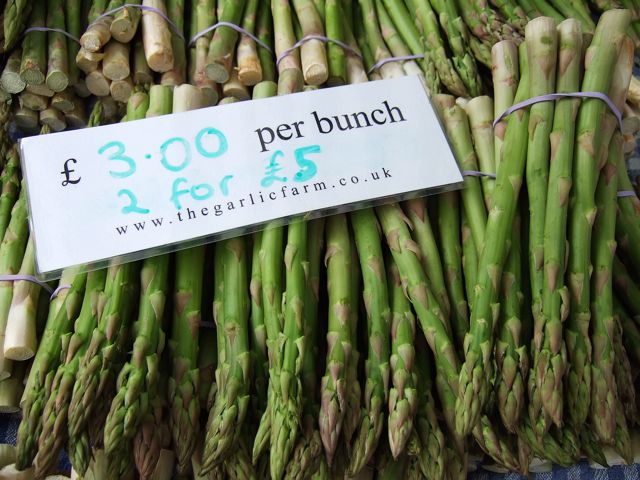
Asparagus has come so early this year - a good month before the beginning of the official English asparagus season - that there's a danger you may be fed up with it already and be casting around for creative things to do with it. This is a good way to use up the thin asparagus called sprue or those misshapen spears you sometimes find at farm gates which don't meet supermarkets' exacting standards.

Asparagus carbonara
Serves 2

A bunch of asparagus
1 tbsp olive oil
A slice of butter
1/2 a bunch of spring onions, trimmed and sliced
1 tbsp fresh tarragon or 1 tsp dried tarragon (optional but good)
200g tagliatelle, fettucine or spaghetti
3 large eggs, lightly beaten
4 tbsp grated parmesan or Grana Padano + extra for serving
A spoonful or two of double or whipping cream (optional)
Salt and freshly ground black pepper

Cut the bottom quarter to a third off the asparagus spears. Cut off the tips and set aside then roughly chop the rest of the stem.

Heat a frying pan, add the oil then when that’s hot add the butter. Tip in the chopped asparagus and sliced onions, add the tarragon and stir for 2-3 minutes. Add the tips to the pan and fry a few minutes more until tender then take off the heat.

Meanwhile bring a large saucepan of water to the boil, add salt and cook the tagliatelle for the time recommended on the pack. Spoon off about 3 tbsp of the cooking water into the asparagus then drain the pasta and return to the pan.

Tip in the beaten eggs, parmesan and cream if using and mix well. The heat of the pasta will cook the egg but shouldn’t scramble it. Season with salt and freshly ground black pepper.

Quickly reheat the asparagus and toss with the pasta. Serve in warm bowls with extra parmesan.
Read more ►

Thursday, 5 April 2012

The best of the supermarket Easter wine offers

0 comments
There’s a bit of a backlash against supermarket half price wine offers at the moment with which I’ve every sympathy. To artificially inflate wine prices only to heavily discount them sails perilously close to the wind legally but if the wines have been on offer in at least some stores at the full price they're in the clear. And this kind of discounting will go on unless the public boycott special offers in their droves (unlikely) or the Government sees fit to ban it (almost equally so).

So many of the following offers don’t look as good as they seem but at the price they’re being offered the wines are worth buying. I’ve said it before and I’ll say it again. Don’t be fooled by the size of the discount and never pay the full price for wines that are regularly discounted.

Asda
Asda Mas Miralda Cava £5 - well above average supermarket own brand Cava; Extra Special Fiano and Pinot Grigio, both £5; Rigal, The Original Malbec £5; Casillero del Diablo Cabernet Sauvignon , Chile £5; Campo Viejo Crianza £6

Co-op
Charles de Cazenove champagne is on sale at £15.99 - certainly not worth the original £31.99 but a fair deal at this price. The light, creamy Torres Vina Sol is also a decent buy at £4.99 if you’re looking for an everyday white.

Marks & Spencer
A well-priced Italian pair: Vermentino £5.99, Chianti Colli de Rasenna £5.99. Also 6 for the price of 5 on all bottled beers. Offers last until April 7th.

Morrisons
Not the easiest supermarket to check out online but the Ventoux red (£4.98), Calvet Sauvignon Semillon (£5.49) and Warres LBV £6.99 would all be worth a punt. And Innis & Gunn Oak-aged and Rum Finish beers at 2 for £3 is a good deal along with Morrisons The Best Vintage cider at £1.99 for 750ml. Beware ‘Better than half price’ offers in general though.

Sainsbury’s
There are reductions on some of the Taste the Difference range including TTD prosecco £7.99, and the TTD Languedoc Red, TTD Languedoc white and TTD Touraine Sauvignon Blanc which are worth buying on a 2 for £12 offer

Tesco
See my recommendations in last week’s Guardian column

Waitrose
Bredon Brut champagne is down to £13.99 again - a good buy if you want fizz for a wedding. Other deals: Lindauer Special Reserve Brut is £8.99; Baron de Ley Club Privado Rioja £6.32; Wither Hills Sauvignon Blanc £6.66; Muscat-de-Beaumes-de-Venise, Carte d’Or £4.99 a half bottle
And if you miss them? Don't panic - there will be more 'special' offers as soon as Easter is over plus the usual seasonal wine fairs.
Read more ►

Sunday, 1 April 2012

Eggs and asparagus, Istrian-style

0 comments


You might not think there's a lot to say about eggs and asparagus that hasn't already been written but then you probably haven't been to the northern part of Croatia that's known as Istria at this time of year. (No, nor had I.)

Over the three days we were there we had it three times - each served slightly differently. The most popular way to cook it is simply to saute the asparagus in a little olive oil then add some lightly beaten, seasoned eggs but it tasted like no other scrambled eggs - or asparagus - that I've ever eaten.


That's partly because the asparagus is wild with a more herbal, bitter taste than you get at home, partly due to the intensely grassy, green olive oil and partly the eggs which were super-fresh with deep yellow yolks. I reckon the best way to replicate the taste would be with the fine asparagus called sprue, maybe adding a small handful of shredded wild rocket.

Another way to serve it is with a chopped egg sauce and some fried ham or bacon as we did at a restaurant called Nono in Umag.


What's great about the dish is that it's so seasonal, made out of ingredients any smallholding had to hand or could forage for themselves. The period from now until May 1st is celebrated as 'Istrian asparagus days' - asparagus is regarded as an aphrodisiac and a protection against snakes, according to the website Colours of Istria. "Apparently, if you eat the raw tip of the first asparagus you pick at the beginning of the harvesting season, you will be safe from snakes in the forest for the rest of the season." Which must be a relief.

What I particularly like about this promotion is that the Croatians are perfectly happy to put a humble dish like scrambled eggs on a menu at a smart restaurant. Why to goodness can't we?
Read more ►

Sunday, 11 March 2012

How to cook shortribs - with brilliant leftovers

0 comments

Just before winter finally disappears (although looks like I may already have missed the boat) here's a wonderfully warming dish of braised beef shortribs I made last weekend when I was having a bit of freezer clearout. To be honest I'd forgotten about them - as you do. They were a bargain I'd picked up in one of our local Bristol butchers Ruby & White for under £10, I seem to remember. Impressive as there was enough for two generous meals.

First I followed the recipe below from The Frugal Cook which gave us two socking great ribs to feast on on Sunday night. I left them in the AGA overnight, cooled and skimmed them the following morning then reheated them for dinner along with some roast carrots.

You don't have to use a whole bottle of wine for the dish (I'm lucky enough to have a ridiculous number of open bottles due to the day job) - if you replace half with stock it will still be delicious - but more gravy-like.

Braised beef short-ribs
Short-rib is a classic American and French cut which used to be quite hard to find but which is increasingly widely available. They’re thick chunky wedges of beef on the bone and need long slow cooking.

Serves 4-6
2 tbsp oil
1.2kg beef short ribs
2 medium onions, peeled and roughly chopped
2 medium carrots, peeled and sliced
2 cloves of garlic, peeled and crushed
2 level tbsp tomato purée
1 rounded tbsp plain flour
600-700ml full-bodied red wine or wine and stock combined + an extra half glassful
2 sprigs of thyme
Salt and freshly ground black pepper

Heat the oil in a large ovenproof pan or casserole and brown the ribs on all sides. Set aside. Turn the heat down and fry the chopped onions and carrots in the oil until beginning to soften (about 7-8 minutes). Stir in the garlic and tomato puree and cook for a minute over a low heat then stir in the flour. Gradually add 500ml red wine then heat, stirring, until the sauce has thickened. Season with salt and pepper. Return the ribs to the pan, adding enough extra wine, stock or water to ensure they’re covered with sauce and bring to the boil. Turn the heat right down and simmer on the lowest possible heat or transfer the casserole to a low oven (140°C/275°F/Gas 1) for 3 1/2 to 4 hours until the meat is falling off the bone. Check the casserole every hour or so to make sure it isn’t cooking too fast. The surface should barely tremble. Remove from the heat and cool then refrigerate overnight. Skim the fat off the surface of the casserole then return the ribs to the liquid in the casserole. Add another half glassful of red wine and reheat slowly.

The following night I made the dish I'd actually been gagging to make - a simplified version of the beef shin macaroni (aka macaronnade) in the Hawksmoor at Home cookbook in which I had a hand. You simply shred the remaining meat and fold it and the sauce - of which you need a fair bit - into some freshly cooked short or 'elbow' macaroni. The kind you use for macaroni cheese. I bought mine loose in a shop called Scoopaway in Gloucester Road.

Then you layer it up in an ovenproof dish with a good sprinkle of freshly grated parmesan between each layer and bake it at about 190°C for half an hour or so. About 60-75g of parmesan in total - you need to be quite generous with it. I won't say it's the world's most beautiful dish (not helped by this murky low-lit photo) but it is insanely good. Like the best spag bol you've ever tasted. Feeds 4.

Read more ►

Wednesday, 7 March 2012

Why you should try Fairtrade wine

0 comments

I meant to post this before but there's still a chance to try some Fairtrade wines at a discount before Fairtrade Fortnight ends this Sunday. The best place to go is the Co-op which not only has the widest range but has knocked 20% off across the board on all Fairtrade goods including bananas, chocolate, tea and coffee*.

I've been critical of Fairtrade wines in the past (see my Guardian column last year) but they do seem to have improved, especially the reds. This year I recommended the exuberant, fruity Co-operative Fairtrade 2011 Bonarda Shiraz (down to £4.99) from the La Riojana co-operative in Argentina, a great wine to serve with a robust pasta sauce or a Friday night pizza, the smooth, lush Fairtrade Carmenère (also £4.99) from Chile which, odd though it might sound, is a good wine to serve with a meaty curry like a rogan josh and the rich, full-bodied Fairtrade Gran Reserva Malbec 2011 (down to £6.39 from £7.99), again from Argentina, which would be ideal for a Sunday roast or a steak. In fact it would actually benefit from laying down for a year or so if you've room to stash a few away.

I'm slightly less grabbed by the whites but if you're in search of a light inexpensive chardonnay the Fairtrade Chardonnay from South Africa (£5.99) is perfectly decent and the Torrontes/Chardonnay from Argentina which blends Chardonnay with the indigenous Torrontes grape (£4.99) has an appealing floral twist that would make it a good match for light Asian dishes like stir-fries and salads.

If you've not tried Fairtrade wines before give them a try.

* Actually I've discovered that some of the Co-op offers carry on till March 20th so you've got another week to take advantage of the discounted prices.
Read more ►

Friday, 2 March 2012

How 'product shrinkage' increases prices by stealth

0 comments

Take a look at these two bottles. The one on the right - bought a few months ago - contained 500ml of red wine vinegar. The significantly smaller one on the left, which my husband just picked up from Tesco for £1.23, has only 350ml.

I'm pretty sure I paid around £1.19 for that larger bottle which worked out at 24p per 100ml. The new size works out at 35p per 100ml - a whopping increase in a short period.

I can't for the life of me see why we should pay so much for vinegar. French supermarkets have it at a fraction of the price. In many branches you can't even buy an own brand vinegar now though I notice from mysupermarket.co.uk that Asda has a 350ml bottle for 67p - that's 56p a bottle cheaper than the Aspall branded one.

Product shrinkage has of course been going on for a while but it seems to me it's got way more prevalent recently as this report from Which? last year suggests. I've noticed fewer teabags in some of the packets I buy, for example. Have you spotted any incredible shrinking products lately?
Read more ►

Monday, 20 February 2012

Braised chicory with Roquefort

0 comments

Having spent the last 10 days in France it's struck me again what a mystery it is that you can't order more vegetable-based dishes in French restaurants. It's not that they don't have the produce. Down in the Languedoc they have gorgeous leeks right now and great bagfuls of chicory which is something you rarely find in the UK - or not at a reasonable price. Yet the only greenery most restaurants seem to offer - and have done for the past umpteen years - is salade de chèvre chaud (grilled goats' cheese salad).

Anyway I took advantage of some very good prices (about €2.50 a kilo) to buy 5 heads of chicory to make a side dish to go with yesterday's roast chicken. This is roughly the recipe.

Braised chicory with Roquefort
Serves 4-6
5-6 heads of chicory
1 tbsp lemon juice
2 tbsp olive oil
20g butter
About 125ml chicken or vegetable stock
50g Roquefort or other blue cheese. Or almost any leftover cheese for that matter - Comté would be good.

Cut the heads of chicory in half lengthwise and remove any damaged outer leaves. Fill a large shallow pan with water, bring to the boil and add the lemon juice to stop the chicory discolouring. Add the chicory, reduce to a simmer and cook for 4-5 minutes then remove with a slotted spoon.

Discard the water from the pan, add the oil and then the butter. Once melted lay the halved chicory heads in the pan and fry until well browned, turning them carefully halfway through so as not to break them up. Lay them cut side upwards in a shallow baking dish, pour over the stock and crumble over the cheese. Cook alongside whatever roast you're cooking for another 10-15 minutes until the cheese is lightly browned and the stock pretty well evaporated.

I also made a dish of leeks vinaigrette for which I posted a recipe on the blog a couple of years ago. Good to be reminded how good it is though and leeks are very tasty at the moment.

Read more ►

Sunday, 5 February 2012

Dukka (or Dukkah)

0 comments

If you're someone who never manages to use up the nuts or spices you buy for a recipe dukka (aka dukkah) could be your salvation. Basically it's a ground up mixture of roasted nuts, spices and dried herbs in which to dunk bread or raw vegetables. It appears to originate from Egypt though has become very fashionable in Australia. And it's dead tasty.

To keep down the cost if you're making it from scratch buy one of those packs of mixed chopped nuts. I'm not mad about their flavour normally but if you roast them and mix them with spices they taste fine - just nicely nutty. And - hopefully it doesn't need saying by now - buy your spices from a ethnic grocer rather than from the supermarket. You'll pay a fraction of the price.

Makes about 250g mix - enough to feed a group of six to eight though obviously check no-one has a nut allergy.

100g chopped mixed nuts
75g sesame seeds
25g coriander seeds
10-12g cumin seeds
1 level tsp dried oregano
1 level tsp sea salt
1/2 tsp black peppercorns

Preheat the oven to 180°C/350°F/Gas 4

Spread the nuts and seeds on separate baking trays or tins and roast them in the oven until lightly coloured and fragrant - about 7-8 minutes for the nuts, 4-5 minutes for the coriander and seeds and 3-4 minutes for the sesame seeds. (It might sound a faff roasting them separately but you don't want to overcook them. You could toast the cumin seeds in a dry frying pan if you like. The main thing is to watch them like a hawk).

Set the nuts and spices aside to cool. Put the nuts and peppercorns into a food processor or spice grinder, pulse a few times then add the coriander, cumin and sesame seeds and oregano and salt and pulse again. Don't overdo it - you want a rough textured mixture that looks like coarse breadcrumbs (see below). If you haven't got a food processor you could use a pestle and mortar to grind everything up but that's obviously harder work.

Serve with good olive oil, chunks of bread or warm pitta bread and raw veg like carrots and radishes. It's also great as a sprinkle over roast vegetables or you can use it as a coating for soft goats' cheeses - or a topping for roast fish. You could add a few chilli flakes if you want to spice it up but this version is better for kids (provided, just to stress it again, they're not allergic to nuts).

You can keep any leftover dukka for a week or two in an airtight tin or plastic box though you might want to refresh it in the oven for 2-3 minutes before you serve it.


By the way the beetroot dip in the rather messy pic above (suddenly remembered I should snap it half way through eating it) is made from a couple of vac-packed beets - a recipe I adapted from Stephen Markwick's A Well-Run Kitchen. You simply chop them up and whizz them with 2 tbsp Greek yoghurt, 1 tbsp balsamic vinegar, about a teaspoon of ground roast cumin, a pinch of hot pimenton or cayenne pepper and 3 tbsp olive oil and season well with salt and pepper.
Read more ►
 

Copyright © Frugal Cook News Design by O Pregador | Blogger Theme by Blogger Template de luxo | Powered by Blogger